Mobility is a practice, not a verdict.
Range of motion is useful when it helps you move with control. It is not a moral score, and it does not need to look identical from person to person.
Mobility sits between available range, strength, coordination, confidence and the requirements of a task. A person may have substantial range but limited control in a loaded position, or a smaller visible range that works well for their intended activity. The goal is useful options, not a uniform shape.
Study movement- Begin with a task that matters to your week.
- Warm the body before requesting a demanding range.
- Pair range practice with control and strength.
- Use qualified assessment for persistent pain, weakness or numbness.
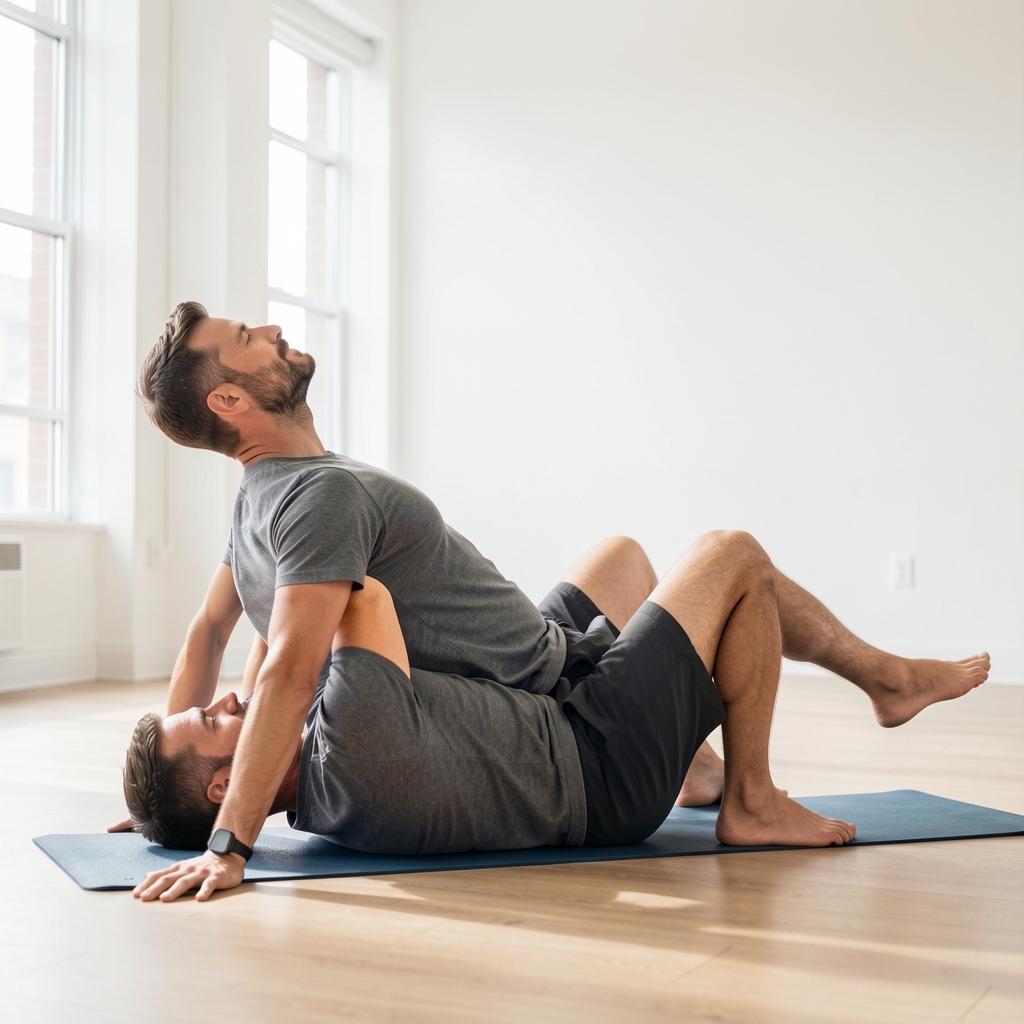
Useful mobility habits
- Warm the body before asking for a demanding range.
- Pair flexibility work with strength in the range you want to keep.
- Use slow breathing to reduce unnecessary bracing.
- Seek assessment when pain, weakness or numbness persists.
Short, frequent practice can be easier to integrate than an occasional long session. Choose a position that allows attention, avoid forcing an endpoint and note how the range behaves during the real task. A mobility drill is useful when it helps the next movement become clearer or more comfortable.
Choosing a mobility lens
| Purpose | Useful lens | Example context |
|---|---|---|
| Warm-up | Gentle movement and temperature | Before a strength or field session |
| Skill | Control at a relevant range | Squat, reach, hinge or rotation |
| Strength | Capacity to produce force in position | Slow loaded practice |
| Confidence | Familiarity with the task | Gradual exposure to a new variation |
Key terms
- Range
- The movement available in a particular task, position and moment.
- Control
- The ability to organize a position or transition with an intended level of confidence.
- End range
- The edge of a currently available movement option, which can vary with context and effort.
- Stability
- The ability to manage a position while the task or external force changes.
“A useful range is one you can understand, control and apply to a task that matters.”
A four-stage practice roadmap
- Explore: use a supported, comfortable version of the movement.
- Own: pause and control the position without rushing.
- Load: add a modest demand while preserving the intended pattern.
- Transfer: use the option in the activity that motivated the practice.
Questions to review
- Did the drill change the task in a useful way?
- Was the response calm during and after practice?
- Could the same work fit the next week?
- Would a professional add context to the concern?
Mobility questions
Is more range always the goal?
No. A range is useful when it supports the task and can be managed. More is not automatically more appropriate.
Should stretching feel intense?
Intensity is not the only way to create a useful practice. Comfortable, controlled exposure can be easier to understand and repeat.
Why does range change day to day?
Temperature, attention, sleep, recent activity and context can all influence a movement. Note the setting before drawing a broad conclusion.